Minimum Viable Content: A Self-Discovery Guide for Creators
One grid with four quadrants, and a way to find the kind of content creation that fits who you are right now.
In this guide
- 01Why Any of This Matters Right Now
- 02The Signal You Should Pay Attention To
- 03Section 1: The Production × Identity Matrix
- 04Quadrant 1: Low Production + Personal Brand
- 05Quadrant 2: High Production + Personal Brand
- 06Quadrant 3: Low Production + Branded Page
- 07Quadrant 4: High Production + Branded Page
- 08Which Quadrant Are You?
- 09Step 1 — Answer these three questions:
- 10Step 2 — Find your quadrant:
- 11What this looks like in practice:
- 12Start With Your MVC — Minimum Viable Content
This document is not a checklist. It is not a course syllabus. It will not tell you to "post every day" or "find your niche" — advice you've already heard and already ignored.
What this document will do is help you locate yourself. Specifically, it will give you one grid with four quadrants. And somewhere in those four possibilities lives a version of content creation that actually makes sense for who you are right now — not who you hope to be in three years.
Here's the promise: there is no quadrant that doesn't work. Every single one has produced credible, influential, well-monetised people. The game is not to find the best quadrant. The game is to find your quadrant — the one where you have an unfair advantage that others in adjacent boxes simply don't have.
This grid helps you figure out what kind of creator you are based on your resources, your personality, and what you want people to associate you with.
At the end of each section, there's a short exercise. Do it on the spot. It takes five minutes and will save you six months of making the wrong kind of content.
Why Any of This Matters Right Now
Let's start with the honest context, because without it, this whole document reads like generic advice you've heard before.
We are living through the fastest compression of expertise in human history. A year's worth of coding ability can now be acquired by a motivated person with access to the right AI tools in a few weeks. What used to take a team of five engineers to build can now be shipped by one person with an afternoon and a credit card. Software is getting cheaper to build. Skills are getting easier to find. And products — for the first time ever — are getting relatively easier to copy.
There is one thing that cannot be compressed. One thing that cannot be copied, replicated by AI, or outsourced overnight.
An audience. Specifically, an audience that trusts you.
Trust is slow. It is built through consistent presence, genuine opinions, and the willingness to show up in public over a long period of time. It cannot be manufactured. It cannot be purchased in any meaningful form. And in a world where everything else is being commoditised at an accelerating rate, trust has become the scarcest resource in business.
The Signal You Should Pay Attention To
In April 2026, OpenAI — the most valued AI company in the world, fresh off an $852 billion valuation — acquired a podcast called TBPN.
This was not a podcast with millions of subscribers. TBPN had 58,000 YouTube subscribers at the time of the deal. It had been running for less than 18 months. Two people, a camera, and an internet connection. The deal was reported to be in the "low hundreds of millions."
Sam Altman called it his favourite tech show. OpenAI's stated reason for the acquisition was to shape the global conversation around AI. What they were buying, in plain terms, was not a piece of media infrastructure. They were buying an audience that trusted those two people. In a world where OpenAI can build anything, the one thing they couldn't build fast enough was that trust.
For context: TBPN's two hosts started with no studio, no audience, no sponsors. One of them texted the other in October 2024 — "The name of the podcast is Technology Brothers" — and they recorded the first episode within two weeks. Eighteen months later, OpenAI wrote a cheque worth hundreds of millions to own what they had built.
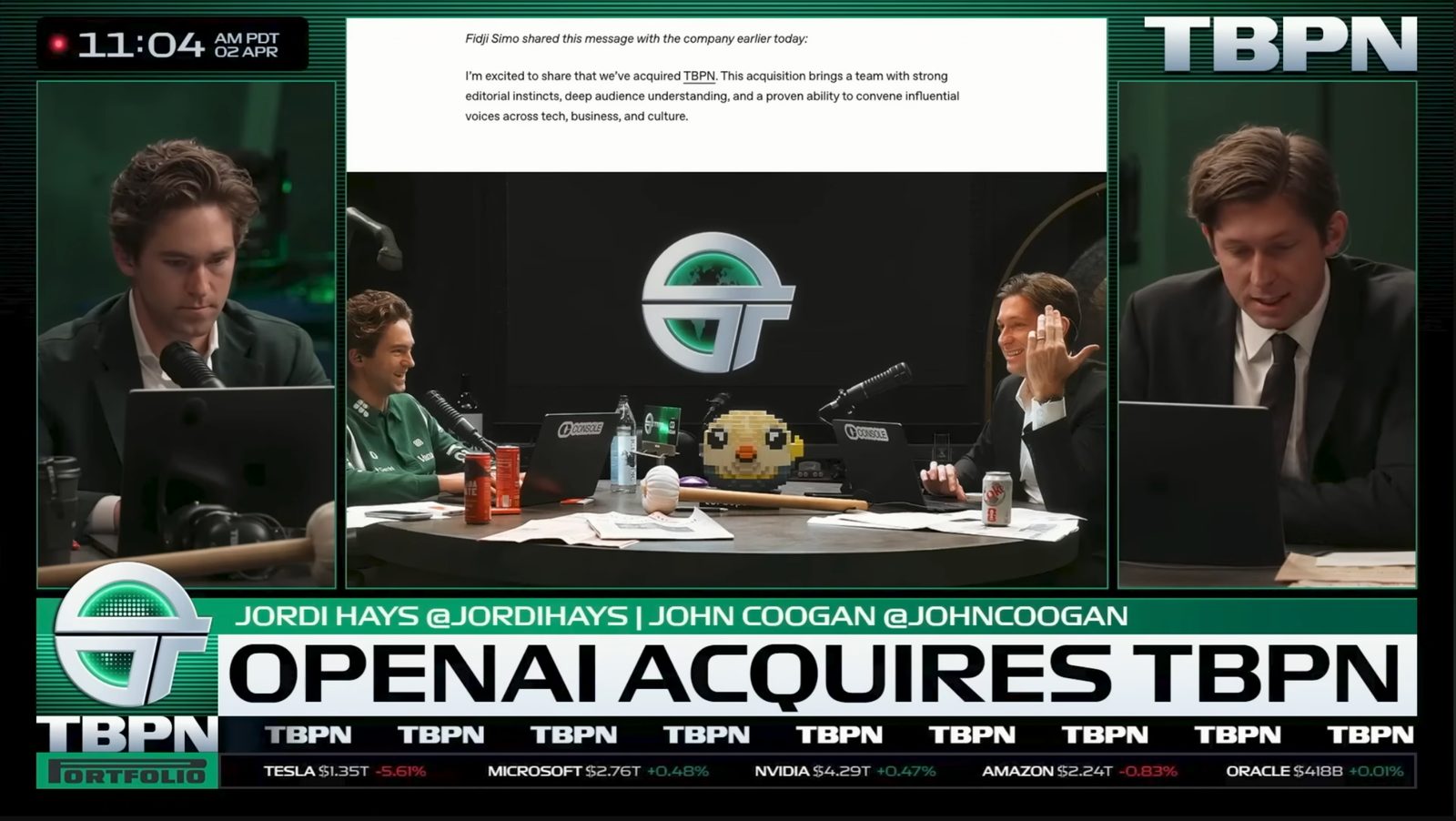
"The world is changing quickly but TBPN will stay the same" — Jordi Hays, co-founder of TBPN, on the day of acquisition
This is not an isolated example. It is a signal about what the next decade of business is going to look like. Every major company is beginning to understand that businesses with audiences will have an asymmetric advantage over the businesses without. They will spend less to acquire customers, hire more compelling talent, build community that generates loyalty, and charge more because trust enables premium pricing.
The Indian context makes this even more interesting. You are playing in a market where the creator economy is still in its early innings. The window that Varun Mayya exploited — making complex ideas accessible through consistent, intelligent short-form content — was open because almost nobody else in his lane was doing it with the same rigour. That window is still open. Not forever. But right now.
The question is not whether you should build a presence online. At this point in the cycle, that question has been answered. The only remaining question is: what kind of presence, on what platform, in what format, starting from where you are today?
That's what this grid is for.
Section 1: The Production × Identity Matrix
Who is speaking, and how much craft is behind it?
The grid separates two decisions that most aspiring creators collapse into one — and that confusion is precisely why so many people start wrong.
Decision A: Is this page about you as a person, or about a brand, topic, or company?
Decision B: Are you building something that requires high production craft — cameras, editing, design, crew — or something that runs on raw insight and consistency?
Click on the creator’s buttons to explore their content if you aren’t familiar with the kind of content they produce.
These are genuinely independent decisions. You can have a personal page that's highly produced. You can have a brand page that's completely raw. The combinations give you four very different paths, each with different entry requirements, different audiences, and different outcomes.
Before you find your quadrant, understand this: simple is not inferior. Sarthak Ahuja built a 2.5 million+ Instagram following with a phone, a chair, and a point of view. Masala Lab has millions of followers from videos that are essentially a man sitting in front of a camera and talking about food science. The production level is not the variable that determines success. The match between what you can sustain and what the format demands is.
Quadrant 1: Low Production + Personal Brand
The Raw Voice
You are the product. The camera is low-tech. The editing is minimal or nonexistent. What the audience is paying attention to is your perspective — your opinions, your expertise, the particular way you see the world.
This is the most accessible quadrant for a working professional to start in. It requires the lowest barrier to entry and rewards depth of knowledge over production polish. The reason it works is counterintuitive: rawness signals authenticity. A professional with genuine credentials and a no-frills setup triggers more trust than the same professional in a production-heavy studio, because the absence of polish communicates "I'm here for the ideas, not the image."
Who this quadrant suits:
Professionals with strong opinions and deep experience in their domain. People comfortable being a little irreverent. Introverts who communicate better through text and talking-head video than through elaborate performance. People who have 30 minutes, not 8 hours, to produce content.
What success requires:
The volume of your thinking has to compensate for the absence of production. You need something real to say. This is not the quadrant for people who are still figuring out their domain. It works best for someone who has been in their field long enough to have formed genuine contrarian opinions — and is willing to voice them publicly.
Creators in this quadrant
- Sarthak Ahuja — Finance professional turned Instagram voice. Phone videos, direct-to-camera, zero production overhead. Built 4M+ followers by making financial concepts accessible and entertaining to people who were bored of traditional CA types. The page works because Sarthak is willing to say the thing the formal finance world is too careful to say.
- Masala Lab / Krish Ashok — Senior technology executive at the Tata Group by day. Sits in front of a camera and dismantles the food myths your family WhatsApp group has been circulating for years. Millions of followers. No studio. No graphics team. Just first-principle thinking explained in plain language.
- Sheena Blends — Built a following through conversational, personal takes on beauty and life. Low-tech, high personality. Her audience shows up for her, not her gear.
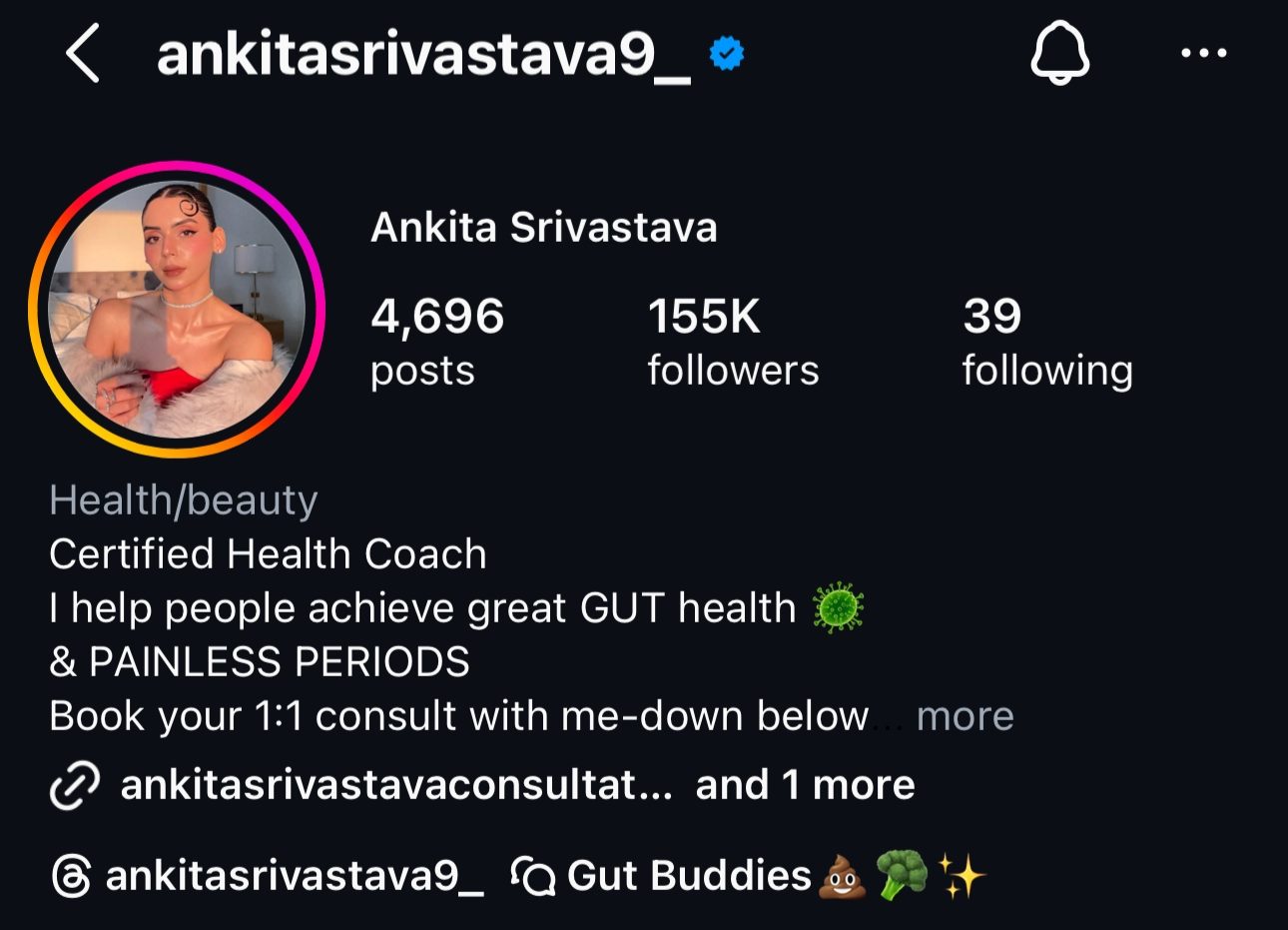
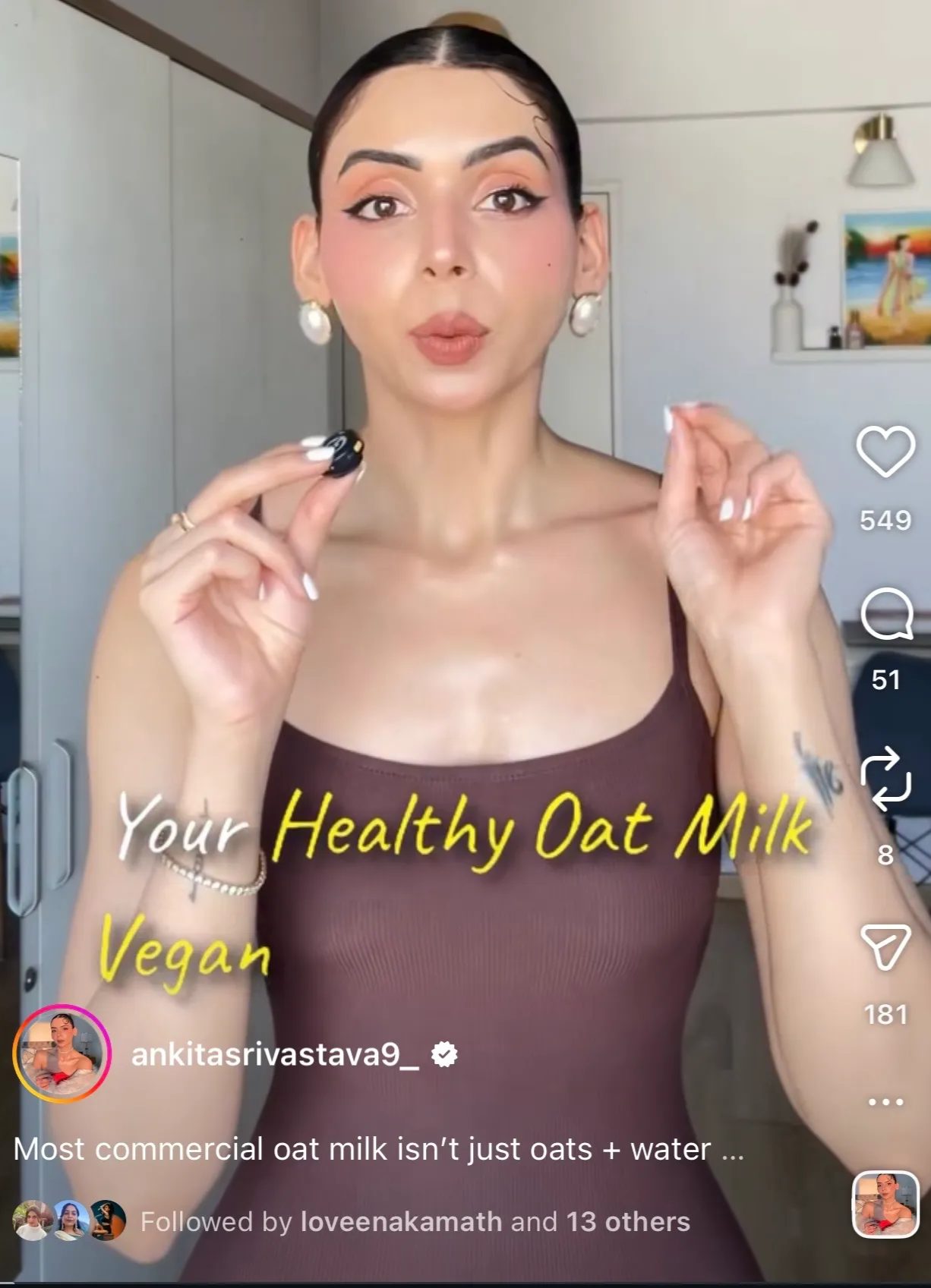
- Ankita Srivastava — Health coach who built a deeply loyal audience by speaking directly to women about gut health and hormones. Simple format, direct camera, zero production overhead. The specificity of her niche is the product.
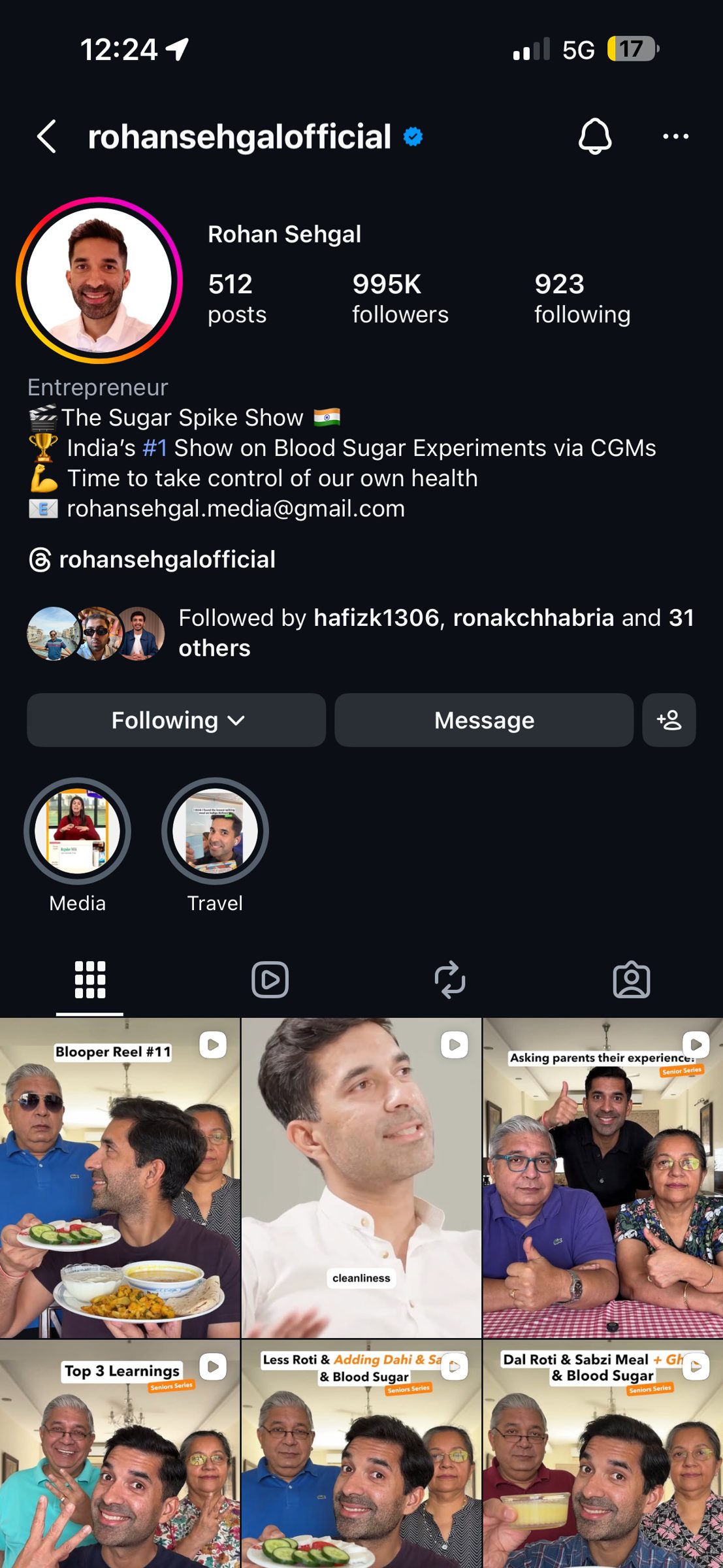
- Rohan Sehgal — Entrepreneur who turned self-experimentation with blood sugar and CGM data into a compelling content format. Simple execution, highly specific angle. A strong example of how a clear contrarian thesis carries a page.
- The Sikh Investor — Former lawyer turned trader and content creator. Built an audience around finance and disciplined living. The identity is the brand — and the low-production format makes it feel more credible, not less.
- Bilawal Sidhu — Ex-Google PM turned AI and VFX creator. Built 1.6M+ subscribers by making complex spatial computing and AI concepts visual and accessible. Sits close to the Q1/Q2 boundary — raw enough in approach, but the ideas are doing all the heavy lifting.
Quadrant 2: High Production + Personal Brand
The Signature Show
You are still the brand. But the production level signals investment, seriousness, and permanence. A YouTube channel with B-roll, music, a proper camera, motion graphics, a consistent visual style. The face is personal — your name is the brand — but the craft says this person takes this seriously.
This quadrant works. It has produced some of the most trusted and profitable personal brands in the world. But it is the most expensive quadrant to enter — in time, money, and production skill — and it is the most common place people start when they are actually a much better fit for Quadrant 1.
The trap: most people who want a Quadrant 2 presence are not yet at the experience level that makes Quadrant 2 pay off. High production amplifies what you have. If what you have is extraordinary, it accelerates you. If what you have is still developing, it just produces expensive, slow-growing content.
Who this quadrant suits:
People who have a genuine story arc — founders, professionals with a documented journey of building something, people willing to share failures in public. People who have access to production resources, or who want to build those skills as a core competency.
Creators in this quadrant
- Varun Mayya — Built a carefully produced personal brand around the future of work and technology. Consistent visual language, edited shorts, a clear point of view on where the world is going.
- Ranveer Allahbadia (BeerBiceps) — Started in fitness, evolved into one of India's largest long-form interview channels. Highly produced, personal brand as the anchor, team behind the scenes.
- Prakhar Ke Pravachan — Clean, produced short-form content. Personal brand built around sharp, counter-intuitive takes on career, money, and life. Strong visual identity.
- Saurav Joshi Vlogs — Vlog-style content, highly personal, but with consistent production quality and a clear aesthetic. Shows that "personal" doesn't have to mean professional — it means you are the brand, and your life is the content.
- Casey Neistat — The global reference for this quadrant. Cinematic personal brand, daily-vlog format that redefined what a YouTube vlog could be. High production, deeply personal, an irreplicable point of view.
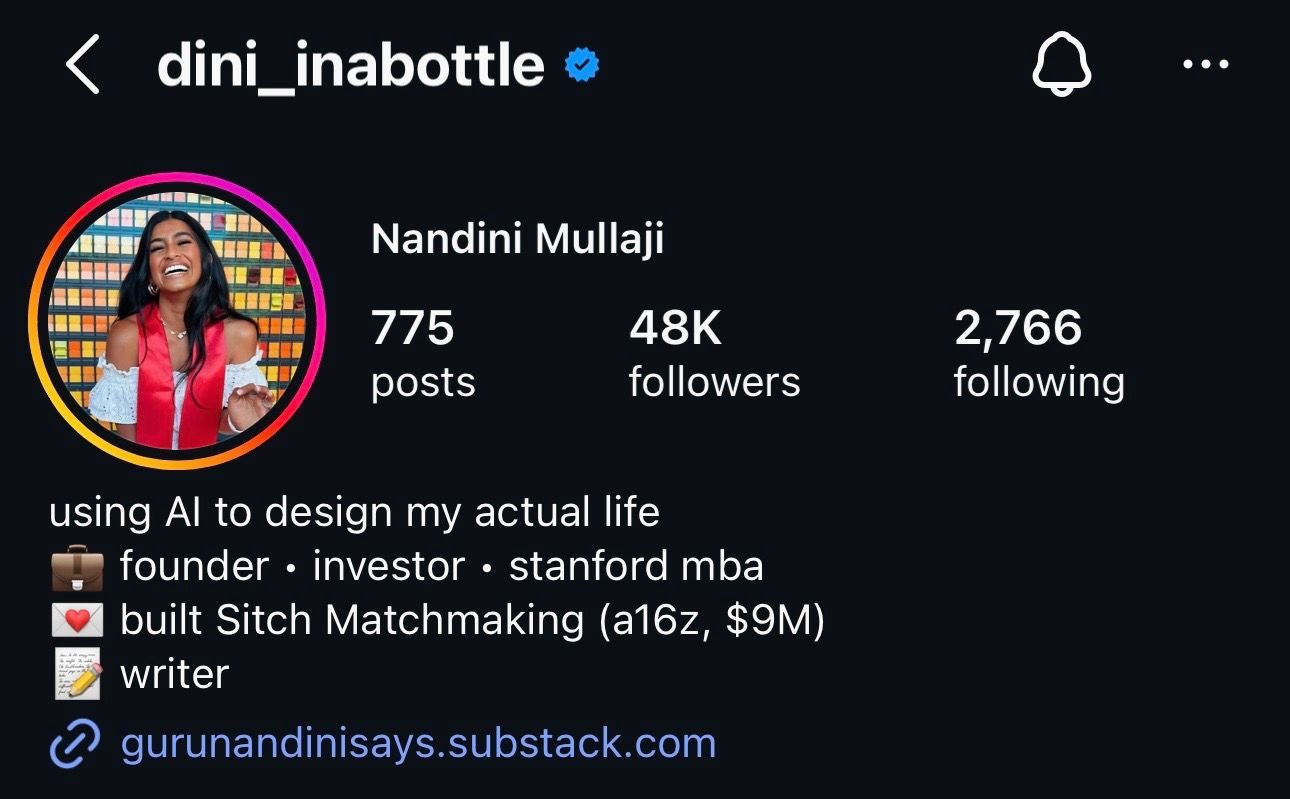
- Dinii in a Bottle — Funded founder building a personal brand in public. Highly produced, sharp visual identity, and the kind of founder-led content that makes the company feel like a movement before the product even launches.
- Aditya Vaidya — Clean, produced content with a strong personal voice. Consistent format, clear aesthetic, the kind of page that makes people follow the person not just the topic.
- Alex Hormozi — The global reference for high-volume, high-production personal brand content built entirely around business frameworks. Relentlessly consistent output, production that matches the scale of the ideas.
Quadrant 3: Low Production + Branded Page
The Authentic Business
Here, the brand is not your name. It might be your company name, your product, your service, or a topic-specific page. And the production level is intentionally low — raw, consistent, authentic. This is where most small business owners, independent service providers, B2B professionals, and early-stage founders actually belong — and almost none of them realise it.
The reason this quadrant is underrated is because people assume a brand page needs to look polished. It doesn't. In fact, the most effective brand pages in this quadrant succeed precisely because of their rawness. They feel real. They feel like a human is running this business, not a marketing agency. And that feeling — in a world drowning in agency-produced, strategically sanitised brand content — is genuinely rare and valuable.
Who this quadrant suits:
Service providers, consultants, small agencies, D2C brands with a real story, early founders who want leads without making themselves the brand. Professionals who want a content presence but have legitimate reasons to keep their personal life private.
What success requires:
Strategy and consistency. You need to know what the page is about and you need to show up with that message repeatedly. Raw content with no strategic purpose is noise. Raw content with a clear point of view is a brand.
Creators and pages in this quadrant
- Startup Pedia — Branded, consistent, low-overhead. Enormous reach built entirely on short-form startup stories with minimal production.
- YourStory — India's leading startup media brand built on consistent, accessible content with a clear editorial point of view. Low production, high editorial discipline.
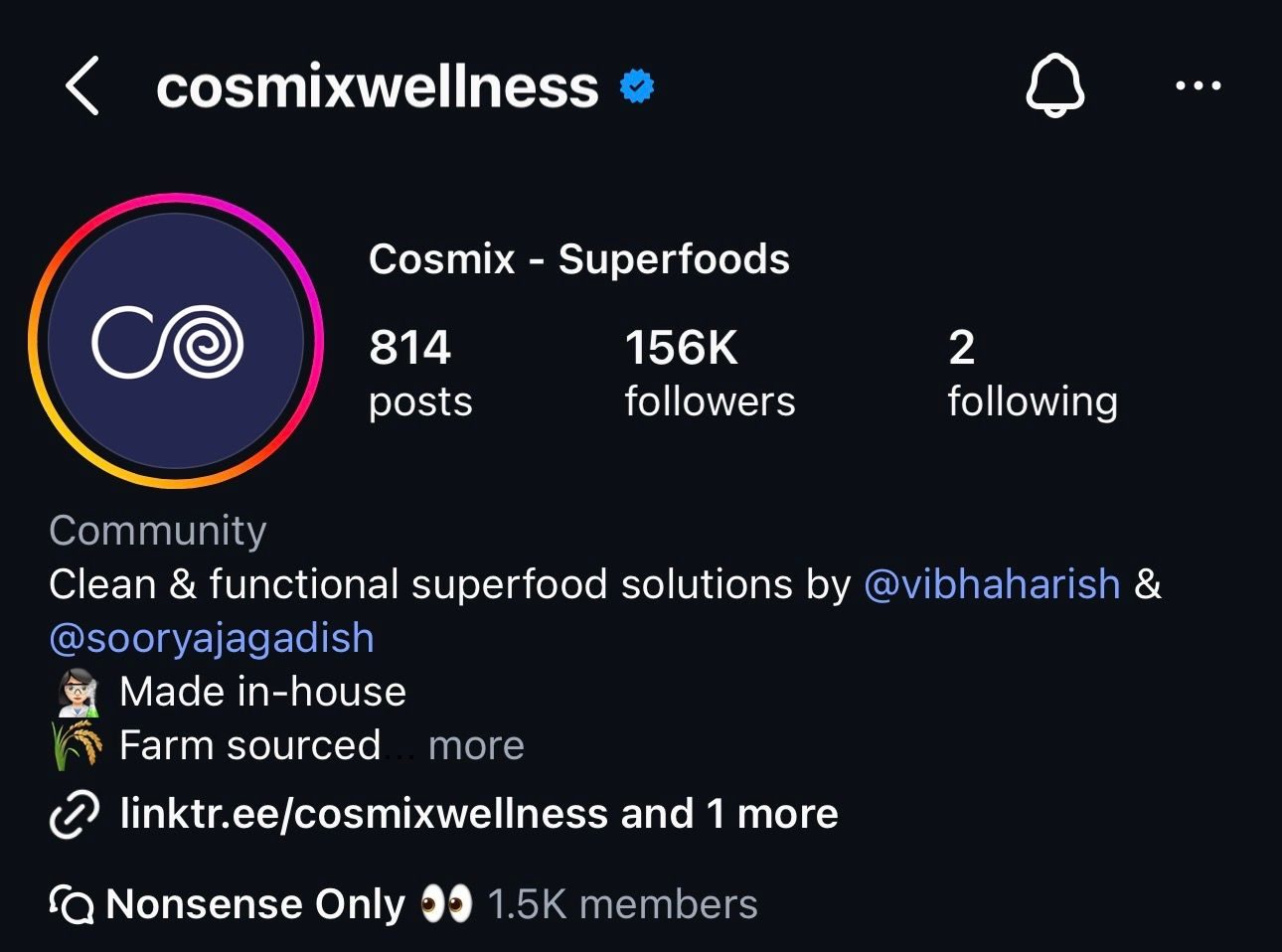
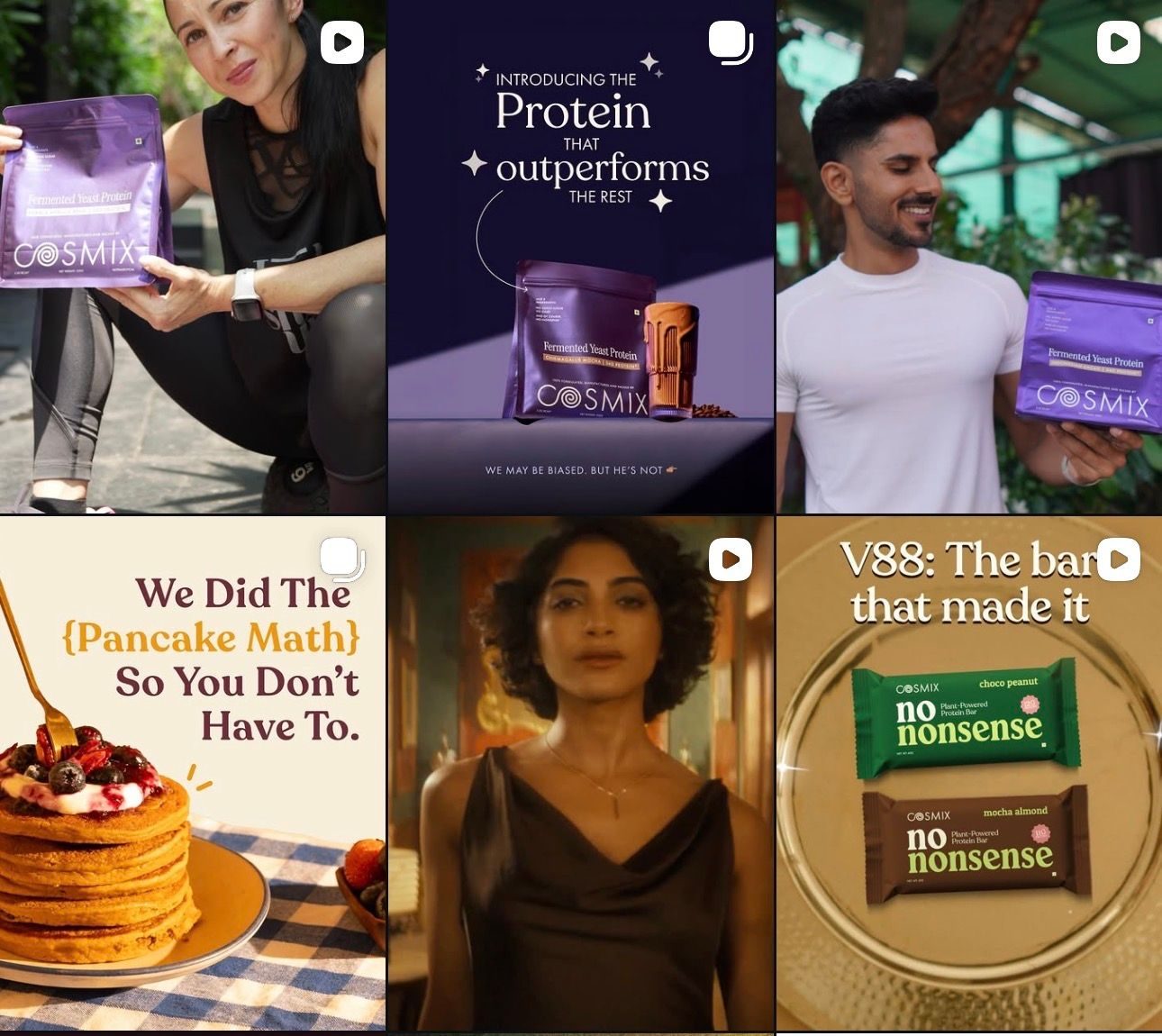
- Cosmix — D2C wellness brand that built its audience through founder-led, education-first Instagram content. The brand voice did the work, not the production budget.
- Wisprflow — Clean, simple branded content that stays on-topic and trusts the product to do the selling. A strong example of a tech product building trust through content before most people had heard of them.
- Personal Brand Launch — Built a 1M+ following on the back of practical, no-frills content about growing a personal brand. The page is itself the proof of concept.
Quadrant 4: High Production + Branded Page
The Media Company
This is the quadrant that requires the most resources — team, budget, distribution infrastructure — and produces the most scalable content engines when done well. The brand is separate from any individual; the production is deliberately at a media company level.
This is not a starting point for most individuals. It is a destination — or it is the right quadrant for teams and companies that already have capital, an existing audience, and a reason to invest in content infrastructure.
Who this quadrant suits:
Established companies entering new markets. Individuals who have already built strong personal brands and are now looking to build institutional media brands around them.
Brands in this quadrant
- AevyTV — High production, consistent format, team-supported output. A reference for what a professionally produced creator-education brand looks like in the Indian context.
- Aevy Video School — The community and education arm of the Aevy ecosystem. Branded, produced, and built around a clear mission of training the next generation of video creators.
- GrowthX — Built one of India's most valuable professional communities off the back of highly produced, insight-rich content about how Indian businesses are built and scaled.
- Whole Truth Foods — Built one of India's most distinctive brand content voices through highly produced, opinionated content about food transparency. The production level matched the ambition of the brand's mission.
- Barbershop with Shantanu — Founder-led podcast with high production values. Sits between Q2 and Q4 — the personal brand (Shantanu Deshpande of Bombay Shaving Company) and the show brand work together.
- Daily Objects — Premium lifestyle brand that treats its content as seriously as its product. High production, consistent aesthetic, the brand's visual identity carries through everything.
- RelationShit Advice — Raunaq Rajani's YouTube show. Started as a simple comedian-and-friends format and evolved into one of India's most distinctive branded content IPs — proof that a strong format can become a brand in its own right.
- TBPN — The clearest global example of what a high-production branded media property can become. Two people, one format, daily output, acquired by OpenAI for hundreds of millions.
Which Quadrant Are You?
Here's a starting point for figuring out yours.
This is not a quiz. Finding your quadrant properly — with the right niche, the right format, the right platform for where you are in your career — is something we spend the first weeks of the programme on. But these three questions will get you closer than most people get on their own.
Step 1 — Answer these three questions:
- Do you want the content to be associated with your name and face, or with a topic, brand, or company you're building?
- Do you have more than 45 minutes a day to invest in production, or are you working with 20–30 minutes between everything else?
- Are you more than 5 years into your domain, or still building foundational expertise?
Step 2 — Find your quadrant:
- Your name is the brand + you're working lean → Q1
- Your name is the brand + you have production bandwidth → Q2
- It's a company or topic page + you're working lean → Q3
- It's a company or topic page + you have production bandwidth → Q4
What this looks like in practice:
- A performance marketing agency founder who wants to build authority and attract better clients → Q2. Personal, produced, opinionated. The audience is other founders and CMOs.
- A D2C skincare brand that wants inbound leads without a face attached → Q3. Branded, raw, consistent. The product does the talking.
- A UX designer six years in who wants to build a studio brand → Q3. Branded, low production, point of view about craft and clients.
- A final-year student managing a company's content channel who wants to build a personal brand → Q1. Personal, raw, specific insider take. The inexperience is the angle, not the liability.
- A media company or funded startup that wants to own a category → Q4. Branded, high production, team behind it. This is the destination, not the starting point.
Start With Your MVC — Minimum Viable Content
One platform. One format. One clear topic. Twice a week. For a year.
Not three platforms because you read a growth hack thread. Not YouTube because that's what "real" creators do. Not high production because you want it to look serious. The smallest, most sustainable version of a content habit that still moves the needle — that's your MVC.
The algorithms reward showing up. The audience rewards being there when they need something. Everything else — production quality, platform diversity, team, systems — comes after you have proof of concept on the smallest possible version.
And here's what most people miss when they're starting: the page you build in year one is not the page you'll have in year three. It starts as a lead generation tool and becomes a hiring magnet. It starts as a portfolio and becomes a community. It starts as a side project and becomes the reason someone pays you a premium, joins your agency, or flies across the country to work with you. You cannot fully predict what it becomes. You can only make sure you start.
Find your quadrant. Start your MVC. Let everything else follow.
This document is a living work-in-progress built from real consultations, real student journeys, and a genuine belief that every professional who puts in the work can find a version of this that changes the trajectory of their career.
— GenC