Minimum Viable Setup: What You Actually Need to Start
One grid that tells you which problems to fix, in what order, and what not to buy yet. Half of it costs ₹0.
This is not a gear list. You've already watched those videos: "Best mic under ₹5,000", "My 2026 YouTube setup", "5 lights every creator needs". You probably have a wishlist saved in your Amazon cart, and you probably haven't posted.
This document does something narrower. It gives you one grid that tells you which problems to fix, in what order, and what not to buy yet.
Here's the reassurance: half the grid costs ₹0. Most of what makes a video look and sound amateur isn't the phone. It's where you put the phone, where you put yourself, and which room you chose. You can fix those tonight.
Each section ends with a short exercise. Do it with your phone in your hand. It takes five minutes, and it will save you a cart full of things you didn't need.
Why Any of This Matters Right Now
Start with an uncomfortable fact: the camera is no longer your bottleneck.
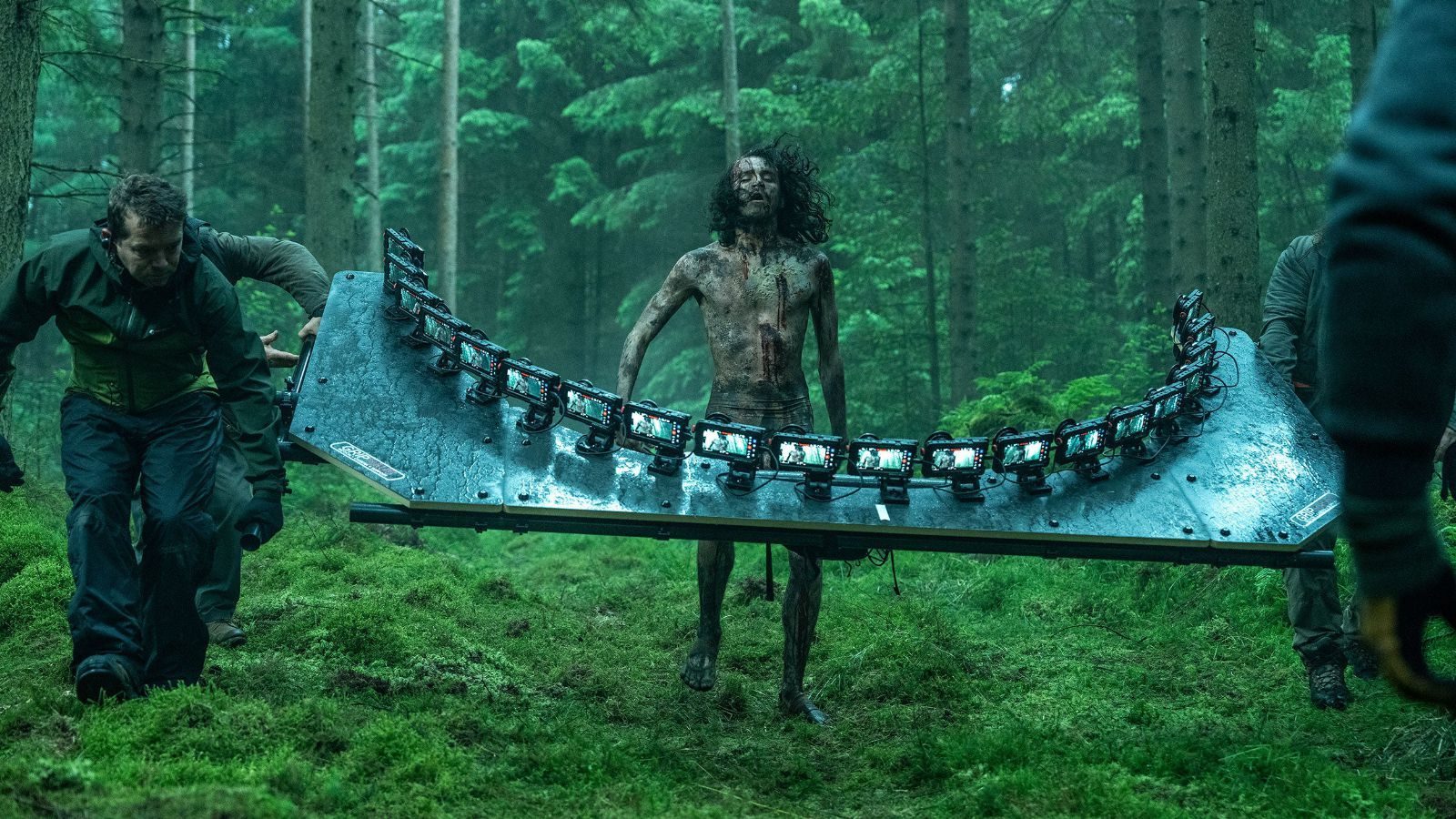
Behind the scenes on 28 Years Later: an arc of 20 iPhones, rigged for a single sequence. Photo: Sony Pictures, via MacRumors.
In 2024, Danny Boyle shot most of 28 Years Later, a studio feature with a reported budget of around $75 million, on the iPhone 15 Pro Max. For some sequences the crew rigged up to 20 iPhones at once. To be fair, those phones sat in cages with cinema lenses and a professional crew behind them, so this was not a cheap shoot. But the decision says something. A director with Hollywood money chose a phone sensor as his main camera. The device in your pocket is now good enough to put on a cinema screen.
So if your videos look flat, the camera isn't the problem. It's the light. If your videos feel cheap, the camera isn't the problem. It's the sound.
The Indian context makes this more pointed:
- There are over 740 million active smartphones in India.
- Mobile data costs operators about ₹8 per GB on average.
- 588 million Indians watched short video in 2025, which is 61% of internet users (IAMAI–Kantar).
- Since April 2025, Instagram's Edits app has offered a free, watermark-free, multi-track editor on the same phone.
Capture, editing and distribution are effectively free. What's left is the stuff no gadget fixes: light, sound and showing up.
Now the counter-example. In December 2024, Nalini Unagar, who ran a cooking channel, posted publicly that she was quitting YouTube. Over three years she had put about ₹8 lakh into a kitchen set, studio equipment and promotions. Her channel had about 2,450 subscribers after 250 videos. In her words: "The return? ₹0." She then put all her studio equipment up for sale.
Her money wasn't all gear. But the pattern is common: spend first, find out later. This guide is built to make you do the opposite.
Section 1: The Setup Grid
What does the viewer notice, and what does it cost to fix?
Most beginners collapse two separate questions into one word, "quality", and answer both with one verb: buy.
The grid separates them.
Question A: Is the problem something the viewer hears, or something they see?
Question B: Can you fix it with a habit (free), or does it need gear **(paid)?**Those two questions give you four boxes:
- The Window (free, picture)
- The Quiet Room (free, sound)
- The First Purchase (paid, sound)
- The Last Purchase (paid, picture)
The order matters as much as the boxes. Do the top row on day one. Buy from the bottom left only when the top row stops being enough. Buy from the bottom right only when your content is paying for it.
Why does sound come before picture? Researchers Eryn Newman and Norbert Schwarz tested it in 2018. They played the same talks, once with clean audio and once with slightly degraded audio. With worse sound, listeners rated the research as less important and the speaker as less intelligent and less likeable. Nothing else had changed. Schwarz's explanation: when information is harder to process, people find it less credible.
That finding is about speech: talks, interviews and explainers. That's exactly what a talking-head Reel or a YouTube explainer is. For fast, visual content like dance, travel or sport, picture matters more. But if your content is you saying something, your audio is part of your credibility.
Quadrant 1: Free + Picture
The Window
What it is. You move your phone, your chair and yourself until the biggest light source in the room is in front of you. In most Indian homes that's a window. It's free, it's soft and it's bigger than any light you could afford.
Why it works. The size of a light matters more than its price. A window is a 4-foot soft box that the sun powers for free. Facing it evens out skin tones and puts a natural sparkle in your eyes. An overhead tubelight does the opposite: it gives you dark circles, a shiny forehead and flat skin.
The checklist (each line is backed by YouTube's own mobile filming guidance or standard cinematography practice):
- Face the window, at about 45°. Don't sit with the window behind you. Backlight turns you into a silhouette.
- Use the rear camera. It records at a higher resolution than the selfie camera. Prop your phone so you can see yourself, or use a cheap mirror.
- Lock exposure and focus. Long-press on your face in the camera app, so the brightness doesn't pump every time you move.
- Wipe the lens. A phone lens spends all day in your pocket, and one thumbprint is enough to blur and haze the whole picture.
- Keep the camera at eye level. Stack books if you have to. A low angle looking up your nose makes you look careless, not casual.
- Use one clean background. A plain wall or a bookshelf, not a pile of laundry.
Who this suits. Everyone, on day one. Especially people who film in daylight: students, people who work from home, early risers.
What success requires. Consistency of time. Window light changes through the day. Pick a slot, like 9–11 am, and film your batch then, so your videos look the same week after week.
The trap. People buy a ring light to fix a problem that was really "I'm sitting with my back to the window." Turn the chair around first.
Creators who started here
- Bhuvan Bam (BB Ki Vines, 26M+ subscribers) built India's first YouTube superstardom on a hand-held phone. In a 2018 interview he said he didn't use a DSLR, just his phone's front camera. He even said that when he tried producing a video with good equipment, his audience didn't like it.
- Khaby Lame (163M+ TikTok followers, the most-followed account on the platform) started posting from a bedroom he shared with his brother. The New York Times noted that he used an outdated phone and that the lighting "isn't great". The idea did all the work.
- MrBeast (500M+ subscribers) started filming on his phone with almost no equipment, and bought gear only by reinvesting what the channel earned.
Quadrant 2: Free + Sound
The Quiet Room
What it is. You pick the room, the time and the distance that make your voice sound close, clean and present, before you spend a rupee on a mic.
Why it works. Sound loses about 6 dB of loudness every time you double the distance from the mic. A phone at arm's length catches your voice. A phone across the room catches the room: the fan, the pressure cooker, the echo off the tiles. Most "bad mic" problems are really distance and room problems.
The checklist:
- Choose the softest room, not the prettiest one. A bedroom with a bed, curtains and a cupboard of clothes beats a bare living room with marble floors. Soft surfaces soak up echo, and hard ones bounce it back. YouTube's own guidance suggests covering hard surfaces with cloth and pillows. A bedsheet hung behind the camera works.
- Get the phone close. For talking heads, frame from the chest up so the phone sits within about an arm's length.
- Switch off the fan and the AC for the take. Yes, in May too. Record in short takes and turn them back on in between.
- Pick your time. Early morning and late night are quieter. Avoid peak traffic, construction hours and the building's water-motor schedule.
- Do a 10-second test with earphones in. Listen before you record the whole thing, not after.
Who this suits. Every creator whose content is them talking: explainers, opinions, tutorials, interviews.
What success requires. Patience with your own home. You will have to say "one minute, I'm recording" to your family more often than you'd like.
The trap. Tiled kitchens and bathrooms. They look clean on camera and sound like a railway station. If you film cooking content, this is where you'll feel the limit of free fixes first. That's the signal that you need Quadrant 3.
Quadrant 3: Paid + Sound
The First Purchase
What it is. A small mic clipped close to your mouth. It's the single cheapest upgrade with the biggest jump in how credible you sound.
What it costs (approximate prices in late 2026; they change daily):
| What | Example | Approx. price |
|---|---|---|
| Wired clip-on (lav) mic | Boya BY-M1 | ₹750–950 |
| Budget wireless | Boya Mini | from ₹3,200 |
| Mid wireless | DJI Mic Mini / Hollyland Lark M2 | ₹9,000–12,000 |
Why it works. A lav mic solves distance permanently. It sits a hand's width from your mouth, so your voice drowns out the room. It's the Newman–Schwarz effect in your favour: clean sound makes you seem more credible, more intelligent and more worth listening to. And it costs less than a pizza night.
Who this suits.
- People whose best room still fails the eyes-closed test.
- People who film in kitchens, offices, hostels or anywhere else they can't control the noise.
- People who walk while they talk. They're the ones who should pay extra for wireless.
What success requires. Buy only what your format needs:
- Sitting at a desk: a wired lav is enough.
- Moving around, filming outdoors or interviewing someone: wireless is worth it.
The trap. Buying a ₹10,000 two-transmitter wireless kit before you've posted twenty videos, "in case I start a podcast". You won't need the second mic for a year, if ever.
Creators who started here
- Raj Shamani (22M+ subscribers, Figuring Out) recorded his early podcast in a coaching-centre classroom with a single microphone. By his own account, the first 50 episodes got almost no audience. The setup wasn't what held him back. Doing it long enough is what moved him forward.
- Anubhavi Yadav (@anubhaviiiiiii), a comedy creator featured in Instagram's own creator case studies, grew from about 20K to 350K followers in a year while working full-time at an ad agency. She filmed alone, batching five to six Reels at a time in her kitchen, and cleans up her voice with the free voice-enhancement tool in Instagram's Edits app. That's the last free step before the First Purchase: when an app can't rescue the echo, a ₹900 lav can.
Quadrant 4: Paid + Picture
The Last Purchase
What it is. Lights, reflectors, a camera, lenses. Everything the gear videos are really selling you.
Why it's last. Because of what you just read: your phone is already a film camera, your window is already a soft box, and viewers forgive a slightly soft picture far more readily than muddy sound. Picture upgrades are real, but they sharpen something you already have. They don't create anything new.
There is one exception you should buy early: a ₹300–900 phone tripod. A steady frame at eye level is a habit, not a luxury. It's the cheapest thing on this page.
When the rest becomes worth it:
| Upgrade | Approx. price | Buy it when… |
|---|---|---|
| Phone tripod | ₹300–900 | Day one, or as soon as stacking books gets old |
| White foam board (DIY reflector) | about ₹300 | One side of your face is in shadow by the window |
| Small LED panel | ₹1,100–2,000 | You can only film after sunset |
| 5-in-1 reflector | ₹750–3,000 | You film outdoors and the sun is harsh |
| Camera + lens | ₹50,000+ | Your content is already paying and the phone can't do a specific shot you need |
Who this suits. Creators with proof. They've posted consistently, the audience is responding, and they can name the exact shot or situation the phone can't handle.
The trap. Buying gear to feel like a creator. A new camera feels like progress, and it feels much easier than posting your fourth video. Nalini Unagar's ₹8 lakh is the extreme version, but the small version happens every day: a ₹4,000 ring light that's used twice.
Creators who prove the order
- MrBeast put every early dollar of earnings back into equipment. The channel paid for the gear, not the other way around.
- Bhuvan Bam said publicly that a better-equipped production performed worse with his audience. The intimacy of the phone was part of the product.
- Matt D'Avella, the minimalist filmmaker, sold his RED cinema camera because it was "slowing me down" rather than helping his work.
Which Box Are You Stuck In?
This isn't a quiz. It's a 10-minute diagnosis using your last three videos.
Step 1: Run three tests
- The mute test. Watch your last video on mute. Is your face evenly lit, steady and in focus? Would a stranger keep watching for 5 seconds?
- The eyes-closed test. Listen to it with earphones and your eyes closed. Is your voice clear and close, without echo or fan hum?
- The count. How many videos have you actually posted? Not drafted. Posted.
Step 2: Find your box
- Fewer than 20 posted → The Window + The Quiet Room only. Your budget is ₹0. Your only "purchase" is a tripod.
- 20+ posted, eyes-closed test fails even in your best room → The First Purchase. Buy a wired lav, and buy wireless only if you move.
- Mute test fails because you can only film at night → a ₹1,100–2,000 LED panel, and nothing else.
- Both tests pass → you don't have a gear problem. You have a content problem. Go back to Minimum Viable Content and check your format and topic.
- Both pass, 50+ videos, and the content earns money → The Last Purchase is open to you, one item at a time, each tied to a specific shot.
What This Looks Like in Practice
- A chartered accountant working 9 to 7, who can only film at 10 pm. No window, ever. The ₹1,100 LED panel is a legitimate early buy. So is a wired lav, because the AC and the ceiling fan are always on in her flat.
- A final-year student in a shared hostel room. Picture is fine by the window. Sound is the enemy: roommates, corridor noise. Film in the 7 am quiet window, and buy a wired lav once the free fixes stop working. Nothing else.
- A home cook filming in a tiled kitchen. The kitchen sounds like a hall. A lav mic is her first purchase, possibly before her tenth video. It's the one case where buying early is right.
- A founder filming in a glass-walled office cabin. He doesn't need to buy anything. He needs to move to the conference room with curtains, face the window and close the door.
- A walk-and-talk city creator who films outdoors. Wind and traffic beat any phone mic. A budget wireless mic with a windscreen is his first purchase. A tripod might never be.
Start With Your MVS: Minimum Viable Setup
Face the window. Close the door. Phone at eye level. Mic within a hand's reach.
And for spending:
₹0 until 20 videos. About ₹1,000 until 50. After that, let the content pay.
Not a ring light because a creator you like has one. Not a camera because your phone "isn't professional". Not a two-mic wireless kit for the podcast you might start next year.
Here's what nobody tells you: the setup you have in year one is not the setup you'll have in year three. In year three you might have a camera, a light, a proper mic and someone to hold them. But it should be bought with money the content made, chosen for shots you know you need, by someone who's posted enough to know the difference. Year one's job isn't to look like year three. It's to get you there.
Find your window. Fix your sound. Post the video.
This document is a living work in progress. It's built from real consultations, real student setups, and the genuine belief that the phone already in your pocket is enough to begin.
— Team GenC 💗